
Introduction
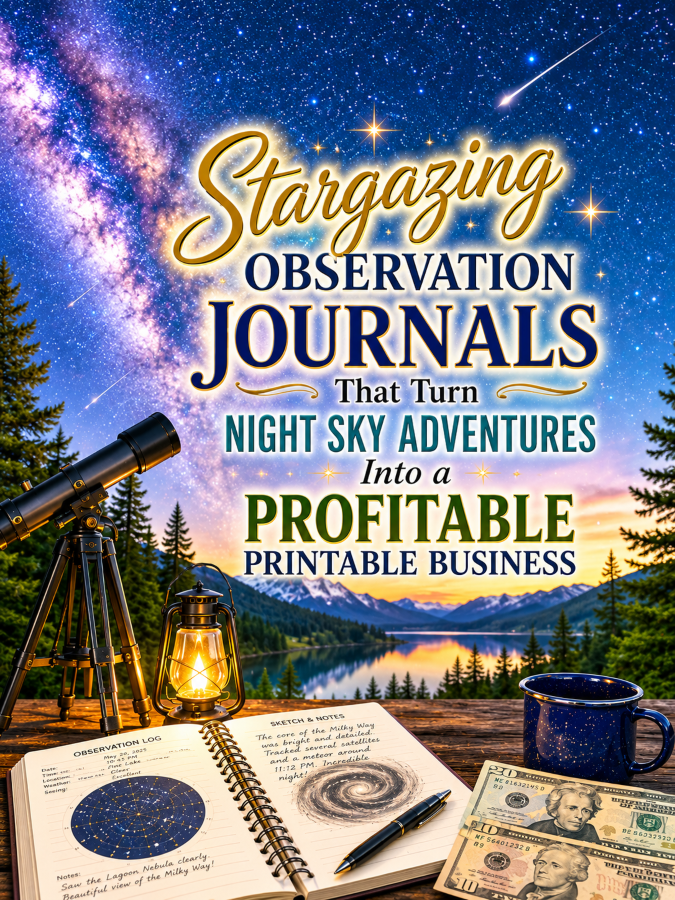
There’s something unforgettable about looking up at a sky filled with thousands of stars. Whether someone is spotting constellations for the very first time, tracking the phases of the Moon, watching a meteor shower, or photographing the Milky Way, every night under the stars creates memories and observations worth recording. That’s exactly why Stargazing Observation Journals continue growing in popularity among astronomy enthusiasts of every age.
Many beginners believe they’ll remember where they observed Saturn, when they spotted their first shooting star, or which telescope settings worked best. Unfortunately, those details fade surprisingly quickly. Before long, observation dates, weather conditions, sky quality, equipment settings, and exciting discoveries become little more than vague memories. That’s Not a Good Thing because every observation can help improve the next one.
That’s exactly where a Stargazing Observation Journal becomes incredibly valuable. Instead of relying on scattered notes, screenshots, and forgotten phone reminders, skywatchers have one organized place to document every observation, celestial event, equipment upgrade, and personal milestone. Over time, the journal becomes both a scientific record and a treasured collection of unforgettable experiences.
Astronomy continues attracting families, homeschoolers, photographers, campers, educators, and curious beginners every year. Major celestial events like eclipses, meteor showers, planetary alignments, and comet appearances regularly inspire thousands of people to begin exploring the night sky. That steady interest makes this an evergreen printable niche with excellent long-term potential.
One thoughtfully designed Stargazing Observation Journal can quietly become the foundation of a profitable printable business while helping people discover the beauty of the universe one night at a time.
Quick Answer
Stargazing Observation Journals are downloadable printable systems that help astronomy enthusiasts record observation dates, locations, weather conditions, telescope settings, celestial objects, constellation sightings, Moon phases, meteor showers, astrophotography notes, equipment logs, and personal discoveries.
A starter journal can comfortably sell for around $7. Expand it into astronomy planners, astrophotography logs, telescope maintenance binders, homeschool science journals, space education kits, and premium astronomy libraries priced at $27, $47, and even $77.
Your customers aren’t simply buying printable pages. They’re investing in better observations, stronger astronomy skills, unforgettable memories, organized learning, and a lasting record of every journey beneath the stars.
Why This Niche Works
Every observation teaches something new. Stargazers naturally enjoy tracking constellations, Moon phases, planets, meteor showers, eclipses, deep-sky objects, and seasonal changes throughout the year. Keeping organized records allows them to compare observations, improve their techniques, and recognize patterns they might otherwise overlook.
Many astronomy enthusiasts also enjoy upgrading their equipment over time. Recording telescope settings, eyepieces, filters, camera equipment, weather conditions, and viewing locations helps them discover which combinations produce the clearest and most enjoyable observations. Those detailed notes gradually become a valuable personal astronomy guide. That’s always a Good Thing.
Once customers discover your Stargazing Observation Journal, they’ll naturally become interested in astrophotography planners, camping journals, homeschool science notebooks, telescope maintenance logs, night photography planners, meteor shower trackers, eclipse planners, and countless related thingees. One successful journal can easily grow into a complete astronomy printable business.
Unlike short-lived hobby trends, astronomy continues inspiring curiosity across every generation. Prior to pouncing upon this opportunity, you should first know all about the:
Tools You’ll Need
You don’t need an expensive observatory or professional telescope to create an outstanding astronomy printable business. These dependable tools are more than enough to help you design journals that skywatchers will enjoy using throughout the year.
- Canva for designing observation journals, constellation logs, Moon trackers, equipment records, and printable astronomy planners.
- Google Docs for organizing astronomy content, educational notes, printable instructions, and planning worksheets.
- AWeber for building your email list with astronomy tips, printable updates, and upcoming celestial events.
- GetResponse for newsletters, promotions, product launches, and customer follow-up.
- Gumroad for selling downloadable astronomy journals and printable learning bundles worldwide.
- Teachable if you’d eventually like to teach beginner astronomy, astrophotography, telescope setup, or night sky observation.
- Amazon Astronomy Journal Research for discovering which observation pages astronomy enthusiasts appreciate the most.
Don’t spend weeks deciding whether your constellation icons should sparkle a little more while astronomy enthusiasts are already planning their next meteor shower viewing. Your future customers care much more about recording meaningful observations than tiny decorative details.
Next, move to:
Your 5-Step Action Plan
Follow these five steps unless you’d rather watch another printable creator become the astronomy resource everyone recommends. The smartest entrepreneurs build journals that customers return to every clear night instead of only once or twice a year.
Step 1. Research Real Stargazing Challenges
Spend about 90 minutes exploring astronomy Facebook groups, Reddit astronomy communities, YouTube astronomy channels, astrophotography forums, Pinterest astronomy boards, and Amazon reviews. Pay close attention to the organizational challenges enthusiasts mention repeatedly because those recurring frustrations become the inspiration for your printable products.
Create a master list containing at least 40 to 50 printable pages. Include observation logs, Moon phase calendars, constellation trackers, telescope setup sheets, weather records, celestial event planners, astrophotography notes, equipment inventories, sky quality records, viewing checklists, annual astronomy goals, and observation summaries. Your research becomes an X-ray machine that reveals exactly where astronomy enthusiasts need practical organization.
Step 2. Build Your Core Stargazing Observation Journal
Create a collection containing 50 to 70 printable pages that support observers throughout an entire year of skywatching. Include observation worksheets, equipment logs, constellation records, Moon journals, planetary observations, weather notes, viewing summaries, photography records, and personal astronomy milestones. Keep every page simple, practical, and easy to use because simplicity is always a Good Thing.
Remember that many observations happen late at night after long days at work or school. Clear layouts and generous writing space make recording discoveries both enjoyable and relaxing while preserving valuable details for future observations.
Step 3. Create Specialty Editions
Build separate journals for beginner astronomers, astrophotographers, homeschool families, telescope owners, binocular observers, campers, educators, children, and advanced deep-sky observers. Specialized journals almost always feel more valuable because customers immediately recognize resources designed specifically for the way they enjoy exploring the night sky.
Each specialty edition expands your audience while strengthening your printable catalog. Before long, you’ll have a complete astronomy resource library instead of relying on a single observation journal.
Step 4. Add High-Value Bonuses
This is where your Stargazing Observation Journal begins standing out from the thundering herd. Include printable constellation maps, annual celestial calendars, astronomy bucket lists, telescope maintenance logs, observing challenge sheets, eclipse planners, Moon phase trackers, and astronomy equipment checklists.
Those bonus thingees require very little additional work yet dramatically increase the value skywatchers receive. Complete astronomy systems almost always outperform simple observation logs because every page contributes to a richer learning experience.
Step 5. Build Your Product Ladder
Launch your starter Stargazing Observation Journal for $7 and let it become the beginning of a growing astronomy printable business. Expand into premium astronomy planning systems around $27, complete observation libraries around $47, and comprehensive astronomy education collections approaching $77. Every additional product naturally complements the others while encouraging repeat purchases.
Before long, your business won’t simply be selling observation journals. You’ll be helping people explore the universe, organize their discoveries, improve their observation skills, and create unforgettable memories beneath the stars.
Once you’ve figured out all of the above, the next step is implementing:
3 Ways to Stand Out From The Thundering Herd!
The astronomy printable market continues growing as more people discover the beauty of the night sky, but many observation journals offer little more than blank record pages. The Good Thing is that you can create a much richer experience by helping people learn, plan, and improve their observations instead of simply writing down what they saw. That extra value makes your printable much more memorable.
Way 1. Turn Every Observation Into a Learning Experience
Don’t stop at providing spaces for dates and notes. Include constellation identification pages, Moon phase guides, observing tips, telescope setup reminders, weather logs, visibility ratings, seasonal sky highlights, and reflection pages that encourage users to learn something from every outing. A journal that teaches while it organizes naturally becomes much more valuable.
Add observation goals, favorite discoveries, celestial event summaries, and annual progress pages that help users see how their astronomy knowledge grows over time. Those practical thingees transform your journal from a notebook into a personal astronomy companion. That’s always a Good Thing because people enjoy seeing their own progress.
Way 2. Design for Different Types of Skywatchers
Not every astronomy enthusiast enjoys the hobby in the same way. Some use telescopes, others prefer binoculars, while many simply enjoy naked-eye observations, astrophotography, camping under the stars, or homeschooling. Create specialized editions that speak directly to each audience instead of expecting one journal to satisfy everyone.
Customers appreciate products that reflect the way they actually enjoy the hobby. Personalized resources often receive stronger reviews because users feel the journal was designed specifically for them.
Way 3. Build Around the Entire Astronomy Calendar
Astronomy isn’t limited to occasional meteor showers. Throughout the year there are eclipses, planetary oppositions, conjunctions, lunar events, seasonal constellations, comet appearances, and countless observing opportunities. Design your journal so customers continue reaching for it month after month instead of only during major celestial events.
Year-round usefulness dramatically increases customer satisfaction while encouraging repeat purchases whenever you release updated editions. That’s one of the easiest ways to rise above the thundering herd.
Next, here’s the thing. You’re probably NOT the only person offering this service. So you now require:
3 Nifty Ways to Find Customers
Your ideal customers are already gathering online to share telescope photos, Moon pictures, observing reports, and astronomy questions. The challenge isn’t finding astronomy enthusiasts. The challenge is introducing your journal before another printable creator earns their attention.
Way 1. Astronomy Communities
Facebook astronomy groups, Reddit astronomy forums, local astronomy clubs, homeschool science communities, astrophotography groups, and space education pages are filled with people looking for useful resources. Offer a free Moon observation sheet or constellation tracker before recommending your complete Stargazing Observation Journal. Helping first builds trust much faster than immediately asking for a sale.
People passionate about astronomy love sharing quality resources with fellow skywatchers. One practical printable can quietly introduce your business to hundreds of highly interested customers.
Way 2. Pinterest
Pinterest continues attracting people searching for constellation guides, telescope ideas, homeschool science activities, camping inspiration, Moon photography, and printable astronomy resources. Create attractive pins featuring observation logs, constellation trackers, celestial calendars, and astronomy planner pages that encourage users to save them before the next clear night.
Unlike many social media platforms, Pinterest content often continues generating traffic for months or even years. Trust me, you’ll thank me later.
Way 3. Astronomy Bloggers and Science Creators
Astronomy bloggers, science YouTubers, homeschool educators, observatories, telescope reviewers, and astrophotography creators are constantly introducing educational resources to their audiences. Reach out with affiliate partnerships or printable bundle opportunities that allow them to recommend your journals alongside their educational content. Their recommendations often generate highly qualified customers because people trust their knowledge.
Strategic collaborations help your printable business grow steadily while reducing your reliance on paid advertising. Strong educational partnerships often become one of your greatest long-term assets.
Speaking of long-term growth, now let’s move to:
3 Takeaways You Won’t Find Elsewhere!
Many printable creators believe they’re selling astronomy journals. The most successful entrepreneurs understand they’re helping people build a lifelong connection with the night sky. That small change in perspective completely transforms the value of your products.
Takeaway 1. You’re Selling Discovery
Your customers aren’t purchasing observation pages simply to fill out forms. They’re investing in unforgettable evenings beneath the stars, family learning experiences, scientific curiosity, better observing skills, and treasured memories that may last a lifetime. Those experiences are worth far more than the printable itself.
When writing your product descriptions, focus on the excitement of discovering the universe rather than simply describing journal features. Curiosity is one of the strongest emotional motivators you can use.
Takeaway 2. Every Clear Night Creates Another Opportunity
Astronomy is never truly finished. Every season introduces different constellations, changing Moon phases, planetary movements, meteor showers, eclipses, and new celestial events. That continuous cycle naturally creates demand for observation journals, event planners, equipment logs, and educational resources throughout the year.
Instead of constantly searching for unrelated audiences, continue serving the same astronomy enthusiasts as their knowledge and equipment continue growing. Loyal hobbyists often become your strongest long-term customers.
Takeaway 3. One Journal Can Become an Entire Astronomy Brand
Your Stargazing Observation Journal can naturally expand into astrophotography planners, telescope maintenance binders, homeschool astronomy workbooks, eclipse planners, constellation challenge books, Moon journals, night sky calendars, astronomy lesson packs, and complete space education libraries. Those connected thingees encourage repeat purchases because every product supports another part of the astronomy journey.
Before long, customers won’t simply recognize your observation journal. They’ll know your shop as a dependable source of practical astronomy resources for learners of every age.
Now that you know the above, it’s time for:
3 Common Mistakes to Avoid
Many creators design journals that only collect observations. That’s Not a Good Thing. Astronomy enthusiasts also appreciate constellation guides, event calendars, telescope maintenance logs, viewing checklists, observation goals, and educational reference pages. Complete astronomy systems almost always outperform simple notebooks because they help users before, during, and after every observation session.
Some sellers overlook beginners. New skywatchers often need encouragement while learning constellations, understanding telescope settings, and planning observation nights. Include beginner-friendly instructions, simple diagrams, and helpful reminders that make astronomy feel welcoming instead of intimidating.
Others stop after creating one observation journal. That’s like opening a planetarium with only one exhibit. Continue expanding into Moon journals, astrophotography planners, homeschool science packs, constellation challenge books, eclipse planners, telescope logs, and astronomy education binders to create a much stronger printable business.
What else should you know? How about:
Scaling Your Results
Expand into a complete astronomy ecosystem. Create Moon observation journals, telescope maintenance planners, constellation challenge books, astrophotography logs, eclipse planning guides, homeschool science workbooks, astronomy lesson planners, celestial event calendars, space-themed activity books, and night sky reference binders that naturally complement your original Stargazing Observation Journal. Every additional printable strengthens your catalog while encouraging repeat purchases from loyal astronomy enthusiasts.
Create an Astronomy Explorer Membership. Release fresh printable pages every month featuring celestial event calendars, observing challenges, constellation trackers, Moon journals, telescope worksheets, astronomy lessons, seasonal sky guides, and exclusive printable resources. Members continue exploring the universe throughout the year while your business benefits from dependable recurring revenue.
Build an email list skywatchers genuinely appreciate. Share astronomy tips, printable freebies, observing guides, meteor shower reminders, telescope advice, astrophotography inspiration, celestial event calendars, and night sky organization strategies throughout the year. A collection containing 40 astronomy printable products could realistically generate an additional $700 to $2,200 each month through memberships, bundles, repeat customers, and affiliate partnerships. Trust me, you’ll thank me later.
Let’s now wrap up everything via the:
Your Next Steps
Start by listing every activity involved in planning and enjoying a successful night of stargazing. Think about checking weather forecasts, finding dark-sky locations, preparing equipment, recording observations, identifying constellations, photographing celestial objects, and reviewing each night’s discoveries. Those recurring activities will naturally shape your printable collection.
Design your first Stargazing Observation Journal in Canva using clean layouts, generous writing space, practical observation pages, and consistent branding that can easily expand into future astronomy products. Focus on helping people enjoy the night sky instead of simply recording observations. Educational resources almost always become customer favorites.
Then introduce your journal to five astronomy Facebook groups, Pinterest boards, homeschool science communities, astronomy bloggers, or YouTube creators. Remember, 5 good messages beats 50 generic ones every single time. One thoughtfully designed Stargazing Observation Journal can quietly become the beginning of an entire astronomy printable business.
Next, let’s finish with:
Final Thoughts
The night sky has inspired wonder for thousands of years, and every observation offers the chance to discover something new. A well-designed Stargazing Observation Journal helps people preserve those discoveries while encouraging them to continue exploring the universe with greater confidence and curiosity. That’s an incredible purpose for a simple printable product.
So, begin by creating one journal that solves one meaningful astronomy challenge exceptionally well. Continue listening to customer feedback while expanding your collection into matching astronomy resources that naturally work together. Before long, you’ll have a printable brand that educators, families, and astronomy enthusiasts happily recommend to others.
You don’t need bazillions of unrelated printables to build meaningful income. You simply need one thoughtfully designed Stargazing Observation Journal that helps people explore the universe, one clear night at a time.
That’s it. That’s your beginning!
If you were creating your first Stargazing Observation Journal tomorrow morning, would you design it for beginner astronomers, homeschool families, astrophotographers, telescope owners, or children discovering the night sky for the very first time?
Enjoy!