Introduction
It’s 7:15 in the morning, everyone’s rushing out the door, and someone suddenly asks the dreaded question: “What’s for lunch?” If you’ve ever stood in front of an open refrigerator hoping inspiration would magically appear, you’re definitely not alone. Millions of parents, professionals, and students face the exact same challenge every single day.
Without a simple lunch plan, people often end up making expensive last-minute food purchases or settling for unhealthy convenience meals. Those small decisions may not seem like a big deal, but they quickly add up over the course of a week, a month, or an entire year. That’s Not a Good Thing because it costs both time and money.
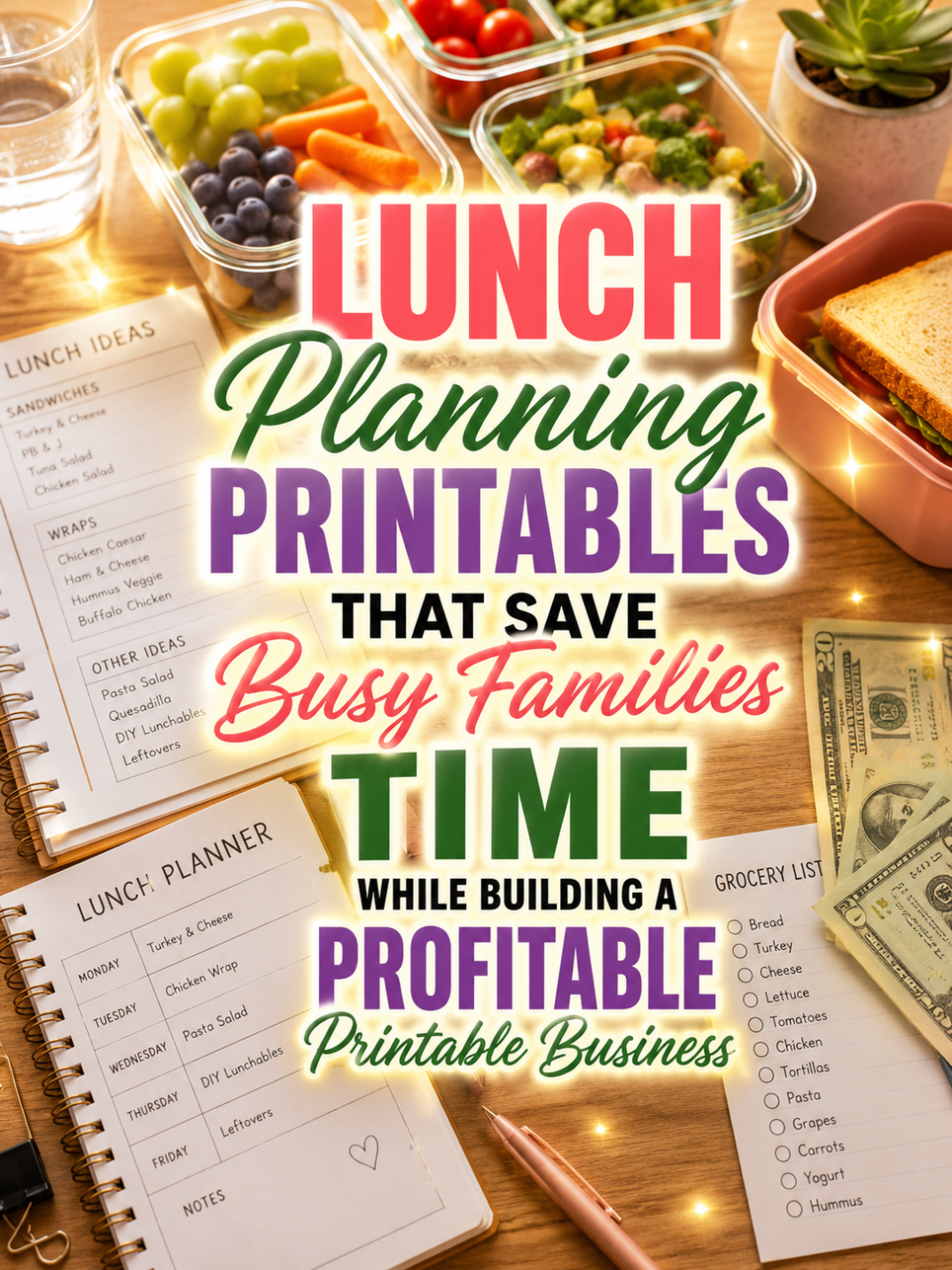
That’s exactly where Lunch Planning Printables become incredibly valuable. They help families organize meals ahead of time, simplify grocery shopping, reduce food waste, and make busy mornings far less stressful. Instead of scrambling for ideas, customers simply follow the plan they’ve already created.
That’s exactly why Lunch Planning Printables continue selling throughout the entire year. Everyone eats lunch, everyone gets busy, and everyone appreciates having one less daily decision to make. That makes this an evergreen printable niche with broad appeal and excellent repeat-customer potential.
One thoughtfully designed lunch planner can become part of a family’s weekly routine while quietly becoming the foundation of a profitable printable business. That’s a win for your customers and a win for you.
Quick Answer
Lunch Planning Printables are downloadable planning systems that help individuals and families organize weekly lunches, meal prep schedules, grocery shopping lists, lunchbox menus, ingredient inventories, budget tracking, nutrition planning, and leftover management. They work well for busy parents, students, professionals, meal preppers, homeschool families, and anyone trying to save time and money.
A starter planner can comfortably sell for around $7. Expand it into meal prep systems, family meal planners, healthy eating journals, lunchbox planners, recipe organizers, and premium kitchen management libraries, and you’ve built a natural product ladder reaching $27, $47, and even $77.
Your customers aren’t simply buying printable pages. They’re investing in less stress, lower grocery bills, healthier meals, and smoother mornings every single week.
Why This Niche Works
Lunch happens every single day. Unlike holiday printables or seasonal planners, lunch planning never goes out of style because people continue eating whether it’s January or July. That consistent demand creates a wonderful opportunity for printable sellers looking for products with year-round appeal.
Families also appreciate anything that reduces daily decision fatigue. When lunch is already planned, grocery shopping becomes easier, food waste decreases, and mornings become noticeably less hectic. Those practical benefits make customers much more likely to recommend your planners to friends and family.
Once customers discover your Lunch Planning Printables, they’ll often return for dinner planners, grocery shopping organizers, pantry inventory trackers, recipe binders, meal prep journals, healthy eating planners, budget meal systems, and countless related thingees. One successful lunch planner can naturally grow into an entire kitchen organization business.
Unlike many trendy printable niches that come and go, meal planning continues to solve an everyday problem that affects nearly every household. Prior to pouncing upon this opportunity, you should first know all about the:
Tools You’ll Need
You don’t need to be a professional chef or nutritionist to create an outstanding lunch planner. These dependable tools are more than enough to help you design practical printable products that customers will happily use every week.
- Canva for designing meal planners, grocery lists, lunchbox planners, and printable kitchen organizers.
- Google Docs for organizing recipes, planning content, and printable instructions.
- AWeber for building your email list with meal planning tips, printable updates, and kitchen organization ideas.
- GetResponse for newsletters, product launches, promotions, and customer follow-up.
- Gumroad for selling downloadable planners and printable bundles worldwide.
- Teachable if you’d eventually like to teach meal planning, meal prep strategies, grocery budgeting, or kitchen organization.
- Amazon Lunch Planner Research for discovering which planning pages busy families appreciate the most.
Don’t spend three weeks debating whether your grocery list should have circles or squares for checkboxes while families are already searching for ways to make weekday lunches easier. Your future customers care much more about saving time than tiny design decisions they’ll barely notice.
Next, move to:
Your 5-Step Action Plan
Follow these five steps unless you’d rather watch another printable creator become the meal-planning expert everyone recommends. This niche rewards creators who solve everyday problems with practical, easy-to-use systems instead of overly complicated planners.
Step 1. Research Real Lunch Planning Challenges
Spend about 90 minutes exploring meal planning Facebook groups, Pinterest boards, Reddit meal prep communities, family blogs, lunchbox inspiration pages, and Amazon reviews. Pay attention to the questions people ask repeatedly because those frustrations become the ideas that shape your printable products.
Create a master list containing at least 40 to 50 printable pages. Include weekly lunch planners, grocery shopping lists, lunchbox checklists, ingredient inventories, leftover trackers, meal prep schedules, healthy lunch ideas, budget meal planners, recipe logs, and family favorite meal pages. Your research becomes an X-ray machine that reveals exactly where busy families struggle every week.
Step 2. Build Your Core Lunch Planning System
Create a collection containing 50 to 70 printable pages that guide customers through planning lunches from grocery shopping to meal preparation. Include weekly planning sheets, shopping lists, meal prep schedules, recipe planners, lunchbox checklists, pantry inventories, and budget trackers. Keep every page clean, practical, and easy to use because simplicity is always a Good Thing.
Remember that most customers will use these pages while juggling busy schedules. Simple layouts, generous writing space, and logical organization will encourage them to use your planner week after week instead of abandoning it after a few days.
Step 3. Create Specialty Editions
Build separate planners for school lunches, healthy eating, meal prep enthusiasts, large families, picky eaters, low-budget meals, vegetarian lunches, office lunches, and homeschool families. Specialized planners almost always feel more valuable because customers immediately see a product designed specifically for their lifestyle.
Each specialty edition opens the door to an entirely new audience while allowing you to build a larger printable catalog. Before long, you’ll have an entire collection of kitchen organization resources instead of relying on one planner.
Step 4. Add High-Value Bonuses
This is where your planner begins standing out from the thundering herd. Include printable grocery price trackers, lunchbox inspiration pages, weekly prep checklists, seasonal produce guides, pantry inventory sheets, freezer meal planners, shopping budget worksheets, and healthy snack planners.
Those bonus thingees require very little additional work yet dramatically increase the value customers receive. Complete planning systems always feel more useful than isolated worksheets because everything works together in one organized package.
Step 5. Build Your Product Ladder
Launch your starter planner for $7 and let it become the foundation of a complete meal planning brand. Expand into premium family meal planners around $27, kitchen organization systems around $47, and complete home management libraries approaching $77. Every additional product naturally complements the others while creating more opportunities for repeat sales.
Before long, your business won’t simply be selling printable planners. You’ll be helping families save time, reduce stress, spend less on groceries, minimize food waste, and enjoy healthier lunches throughout the entire year.
Once you’ve figured out all of the above, the next step is implementing:
3 Ways to Stand Out From The Thundering Herd!
The meal planning niche is incredibly popular, but don’t let that intimidate you. The Good Thing is that many printable meal planners try to organize every meal of the day while giving very little attention to lunch specifically. By focusing on lunch, you can solve a very real problem for busy parents, professionals, students, and meal preppers who simply want one less thing to think about every morning.
Way 1. Focus on Saving Time
Most people don’t dislike making lunch because cooking is difficult. They dislike making the same decision over and over again every single day while they’re already rushing to get ready for work or school. Your Lunch Planning Printables should eliminate that daily stress by providing weekly lunch schedules, meal prep timelines, shopping lists, ingredient checklists, and leftover planners that make each day feel much easier.
When customers can glance at one page and immediately know what’s for lunch, they’ll quickly realize how valuable your planner is. Saving even ten minutes each weekday adds up to dozens of hours throughout the year. That’s exactly the kind of transformation customers happily pay for.
Way 2. Help Customers Save Money
Lunch planning isn’t just about convenience. It’s also one of the easiest ways for families to reduce grocery waste and avoid spending money on expensive takeout meals. Include printable grocery budget worksheets, pantry inventory pages, ingredient usage trackers, and leftover planning sheets that help customers make better use of the food they already have.
Every lunch packed at home instead of purchased from a restaurant can save several dollars. Those savings quickly add up over weeks and months, making your planner feel like a smart investment instead of another printable purchase. That’s always a Good Thing.
Way 3. Create Flexible Planning Systems
No two households eat the same way, so avoid forcing everyone into identical meal plans. Include undated planners, customizable lunchbox pages, rotating meal schedules, themed lunch ideas, and blank planning worksheets that allow customers to create systems that fit their own routines. Flexibility makes your planner useful for families with toddlers, teenagers, office workers, homeschool students, and retirees alike.
The easier your planner adapts to different lifestyles, the more people will recommend it to others. That’s one of the simplest ways to rise above the thundering herd without constantly redesigning your products.
Next, here’s the thing. You’re probably NOT the only person offering this service. So you now require:
3 Nifty Ways to Find Customers
Your ideal customers already spend time looking for meal ideas and organization tips online. The challenge isn’t finding them. The challenge is showing them that your planner will genuinely make their daily routine easier.
Way 1. Parenting and Meal Planning Communities
Facebook groups dedicated to parenting, meal planning, budget cooking, lunchbox ideas, homeschool families, and healthy eating are filled with people looking for practical resources. Offer a free weekly lunch planner or grocery shopping checklist before introducing your complete Lunch Planning System. Helping first builds trust much faster than leading with a sales pitch.
People remember creators who solve problems without immediately asking for money. Once customers experience the quality of your free printable, they’re much more likely to purchase your complete planner collection.
Way 2. Pinterest
Pinterest is one of the best places to market printable meal planners because users actively search for lunch ideas, grocery lists, meal prep inspiration, and kitchen organization tips. Create beautiful pins featuring colorful planner spreads, lunchbox checklists, shopping trackers, and weekly planning pages that encourage people to save them for later.
Pinterest content often continues generating traffic for months or even years after it’s published. That long lifespan makes it one of the smartest marketing platforms for printable businesses. Trust me, you’ll thank me later.
Way 3. Food Bloggers and Nutrition Creators
Food bloggers, meal prep influencers, nutrition coaches, and healthy lifestyle creators constantly recommend helpful resources to their audiences. Reach out with affiliate partnerships or bundle opportunities that allow them to introduce your planners alongside their recipes and meal ideas. Their recommendations often carry tremendous credibility because their audiences already trust their expertise.
Working with established creators helps you reach thousands of potential buyers much faster than trying to build a large audience entirely on your own. Strategic partnerships are often one of the best investments you can make.
Speaking of helping families stay organized, now let’s move to:
3 Takeaways You Won’t Find Elsewhere!
Many printable sellers compete by adding more pages. Successful printable entrepreneurs compete by making everyday life noticeably easier for their customers. That small difference completely changes the way people perceive your products.
Takeaway 1. You’re Selling Less Daily Stress
Your customers aren’t buying lunch planners because they enjoy filling out worksheets. They’re buying a system that removes one daily decision from their already busy lives. That reduction in stress is the real product you’re selling, and it’s far more valuable than the printable pages themselves.
When writing product descriptions, focus on the time, money, and mental energy your planner saves. Those benefits are what convince people to click the “Buy Now” button.
Takeaway 2. Lunch Planning Leads to More Organization
Once families successfully organize lunch, they often become interested in organizing breakfast, dinner, grocery shopping, pantry management, freezer meals, recipes, and household routines as well. That natural progression creates tremendous opportunities for repeat customers who already appreciate your planning style.
One planner rarely stays by itself for long. It often becomes the beginning of an entire kitchen organization library filled with helpful thingees that customers return to purchase throughout the year.
Takeaway 3. Everyday Niches Often Produce the Most Consistent Sales
Holiday printables can create exciting sales spikes, but everyday planning products generate dependable demand because customers continue using them week after week. Lunch planning isn’t tied to a particular season or event, which means your printable can continue attracting buyers throughout the entire year. That’s one reason this niche has such strong long-term potential.
Sometimes the simplest products become the most profitable because they solve problems people face every single day. Never underestimate the power of consistency.
Now that you know the above, it’s time for:
3 Common Mistakes to Avoid
Many creators make their planners too restrictive. That’s Not a Good Thing. Families have different schedules, budgets, dietary preferences, and food allergies, so flexible planning pages almost always outperform rigid meal plans. Give customers room to personalize the system so it works for their unique situation.
Some sellers forget the shopping process. Grocery lists, pantry inventories, ingredient trackers, and shopping budgets are often just as valuable as the lunch planner itself. Including those practical resources transforms your printable from a simple planner into a complete meal management system.
Others create one planner and stop there. That’s like opening a restaurant with only one item on the menu. Continue expanding into breakfast planners, dinner planners, snack organizers, recipe binders, grocery budgeting systems, pantry inventories, freezer meal planners, and complete kitchen organization libraries to build a much stronger printable business.
What else should you know? How about:
Scaling Your Results
Expand into a complete kitchen organization ecosystem. Create breakfast planners, dinner planning systems, grocery shopping organizers, pantry inventory binders, recipe journals, meal prep planners, healthy eating trackers, freezer meal systems, and household budgeting planners that naturally complement your original Lunch Planning Printables. Every new product increases the value of your shop while creating more opportunities for repeat purchases.
Create a Weekly Meal Planning Membership. Release fresh printable pages every month featuring seasonal lunch ideas, grocery savings worksheets, pantry organization tools, meal prep checklists, shopping planners, family menu calendars, and exclusive kitchen management resources. Members will continue adding new pages to their planners while your business benefits from recurring monthly revenue.
Build an email list families genuinely appreciate. Share meal prep tips, grocery savings strategies, healthy lunch ideas, printable freebies, seasonal recipes, organization advice, and budget-friendly meal inspiration throughout the year. A collection containing 40 meal planning products could realistically generate an additional $700 to $2,200 each month through memberships, bundles, repeat customers, and affiliate partnerships. Trust me, you’ll thank me later.
Let’s now wrap up everything via the:
Your Next Steps
Start by making a list of the biggest frustrations people experience when planning lunch each week. Think about forgotten groceries, repeated meals, food waste, busy mornings, budget concerns, picky eaters, and meal prep challenges. Those everyday problems will become the foundation of your printable planner.
Design your first Lunch Planning Printable in Canva using clean layouts, simple planning pages, practical grocery lists, and plenty of writing space that customers can quickly complete. Focus on saving people time and reducing daily stress instead of filling the planner with unnecessary decorations. Practical tools almost always become the ones families continue using for years.
Then introduce your planner to five parenting groups, meal planning communities, Pinterest boards, food bloggers, or healthy lifestyle creators. Remember, 5 good messages beats 50 generic ones every single time. One thoughtfully designed Lunch Planning Printable can quietly become the foundation of an entire kitchen organization business.
Next, let’s finish with:
Final Thoughts
The best lunch plan isn’t the fanciest one. It’s the one that busy families actually use week after week because it makes everyday life noticeably easier. Your Lunch Planning Printables can help customers save time, reduce food waste, lower grocery expenses, and eliminate one more source of daily stress. That’s an incredible amount of value packed into a simple printable product.
So, begin by creating one planner that solves one meaningful lunch planning challenge exceptionally well. Continue listening to customer feedback while expanding your collection into related meal planning and kitchen organization products that naturally work together. Before long, you’ll have a printable library that customers rely on every single week.
You don’t need bazillions of products to build meaningful income. You simply need one thoughtfully designed Lunch Planning Printable that helps families spend less time wondering what’s for lunch and more time enjoying meals together.
That’s it. That’s your beginning!
If you were creating your first Lunch Planning Printable tomorrow morning, would you design it for busy families, school lunchboxes, office workers, meal preppers, or budget-conscious households?
Enjoy!