Introduction
Modern shopping should be easier than ever.
Instead, someone opens 14 browser tabs comparing coffee makers, camping tents, air fryers, laptops, baby strollers, and office chairs while slowly forgetting which product had the longer warranty and which one included the mysterious extra attachment nobody could identify.
The choices aren’t the problem. Organizing the information is.
Buyers want confidence before spending money. They want side-by-side comparisons that make decisions easier instead of harder.
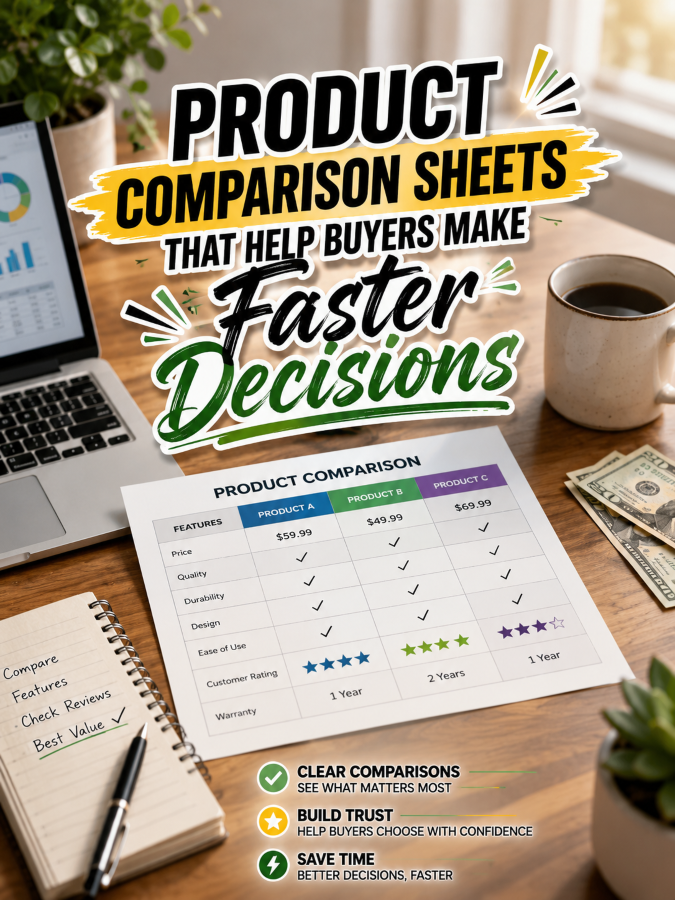
That’s exactly why Product Comparison Sheets continue attracting buyers across dozens of niches. They help shoppers organize features, prices, pros, cons, and important details while giving printable creators an evergreen digital product business with enormous flexibility.
One thoughtfully designed comparison sheet can save someone hours of research and prevent expensive buying mistakes.
Quick Answer
Product Comparison Sheets are downloadable printable tools that help customers compare products side by side using categories such as price, features, dimensions, warranty coverage, ratings, pros, cons, and personal notes.
A starter printable can comfortably sell for around $7. Expand it into niche bundles, category-specific planners, shopping workbooks, and premium consumer decision systems, and you’ve created a natural product ladder reaching $27, $47, and even $77.
Shoppers don’t want more information. They want better organized information. That someone creating that solution could absolutely be you!
Why This Niche Works
People compare products every single day. Whether they’re shopping for appliances, electronics, vehicles, furniture, homeschooling supplies, exercise equipment, or camping gear, buyers constantly evaluate options before making decisions.
Many shoppers create their own spreadsheets or handwritten notes that quickly become about as organized as socks escaping from a tumble dryer during a thunderstorm.
Once buyers discover a comparison system that genuinely simplifies decisions, they’ll happily return for travel planners, budgeting tools, purchase trackers, subscription organizers, and countless related thingees.
Unlike trendy gadgets that disappear after one season, decision fatigue seems determined to stick around forever.
Prior to pouncing upon this opportunity, you should first know all about the:
Tools You’ll Need
You don’t need an MBA or a laboratory filled with testing equipment to build this printable business. These dependable tools are more than enough to get started.
- Canva for designing attractive comparison sheets and printable layouts.
- Google Docs for organizing instructions and product categories.
- AWeber for building your email list with buyer tips and printable updates.
- GetResponse for automated launches and customer follow-up.
- Gumroad for selling downloadable comparison bundles.
- Teachable if you’d eventually like to teach consumer research or printable design.
- Amazon product listings for studying customer questions, reviews, and comparison points buyers care about most.
Don’t spend three weeks researching software and seven minutes creating the product. That’s rarely a Good Thing.
Next, move to:
Your 5-Step Action Plan
Follow these five steps unless you’d rather spend 22 hours comparing products while forgetting why you started shopping in the first place.
Step 1. Choose One Buying Category
Spend about 91 minutes researching customer reviews, shopping forums, Reddit discussions, and product questions. Look for categories where buyers consistently compare several options before purchasing.
Create a master list containing 28 to 35 comparison categories. Include pricing, dimensions, warranty details, shipping costs, subscription fees, customer ratings, maintenance requirements, accessories, and replacement costs.
Your research becomes an X-ray machine that reveals exactly what buyers care about most.
Step 2. Design Your Core Comparison Sheet
Create a printable collection containing 12 to 18 pages that guides buyers through the entire decision process.
Include comparison tables, scoring systems, ranking pages, pros and cons lists, purchase timelines, budget trackers, and final recommendation pages. Keep everything simple because simplicity is always a Good Thing.
Step 3. Build Specialty Editions
Create separate comparison packs for electronics, travel gear, baby products, camping equipment, kitchen appliances, home office equipment, homeschooling resources, and subscription services.
Specific comparison sheets always feel more valuable than one giant workbook attempting to compare absolutely everything sold since 1822.
Your customers will appreciate having choices.
Step 4. Add High-Value Bonuses
This is where your printable begins standing out from the thundering herd.
Include purchase checklists, review trackers, warranty logs, maintenance reminders, budget calculators, return policy summaries, and shopping timelines.
Those bonus thingees don’t require much extra work, yet they dramatically increase the value of your bundle.
People love thoughtful extras that help them avoid buyer’s remorse.
Step 5. Build Your Product Ladder
Launch your starter comparison sheet for $7. Expand into category bundles around $27, then introduce premium consumer research libraries approaching $77.
Before long, your business won’t simply be selling worksheets. You’ll be helping people make smarter buying decisions with greater confidence.
Once you’ve figured out all of the above, the next step is implementing:
3 Ways to Stand Out From The Thundering Herd!
Let’s be honest. Plenty of comparison worksheets already exist online. That’s about as surprising as finding 19 browser tabs open during a laptop shopping session.
The Good Thing is that most of them look like tax paperwork wearing a fake mustache. Your comparison sheets can actually make decisions easier instead of creating fresh confusion.
Way 1. Focus on Specific Buying Decisions
Don’t create a giant comparison workbook covering everything from espresso machines to inflatable kayaks to alpaca grooming equipment.
Create sheets designed for specific purchases such as air fryers, family SUVs, travel trailers, homeschooling curriculums, camping tents, laptops, or kitchen appliances. Specific solutions feel dramatically more useful.
Way 2. Include Emotional Factors Too
Buying decisions rarely happen on logic alone.
Add categories such as ease of use, excitement level, family approval, long-term value, and maintenance headaches. Buyers appreciate having space for the human side of decision making too.
Way 3. Help Buyers Avoid Expensive Mistakes
Most shoppers fear making the wrong choice more than they enjoy making the right one.
Include hidden costs, warranty reminders, accessory expenses, replacement schedules, and return policy notes. Those extra thingees often become the reason customers recommend your printable to friends.
Next, here’s the thing. You’re probably NOT the only person offering this service. So you now require:
3 Nifty Ways to Find Customers
You don’t need paid advertising because shoppers practically shine the Bat Signal every time they type “best” into a search engine.
Way 1. Pinterest
Pinterest users love planning purchases before spending money.
Create pins showing comparison layouts, scoring systems, and decision worksheets for popular categories. Helpful visuals continue attracting buyers long after publishing.
Way 2. Facebook Communities
Buying advice groups exist for almost every niche imaginable.
Join conversations, answer questions, and provide useful advice before mentioning your printable. Helpful people earn attention far faster than aggressive sellers.
Way 3. Bloggers and Product Review Sites
Many review creators constantly compare products for their audiences.
Offer your comparison sheets through affiliate partnerships, guest posts, or collaborative resources that complement their existing content.
Speaking of completed projects, now let’s move to:
3 Takeaways You Won’t Find Elsewhere!
These aren’t feel-good reminders. They’re practical lessons that quietly turn one printable into a dependable digital product business.
Takeaway 1. You’re Selling Confidence
Customers aren’t buying paper grids and checkboxes.
They’re buying confidence that they’re making smart decisions and avoiding expensive regrets. That’s the real product hiding underneath the printable.
Takeaway 2. Decision Fatigue Is Everywhere
Modern shoppers face bazillions of choices.
Your printable acts like a traffic officer directing chaos into neat little lanes where buyers can finally see the road ahead.
Takeaway 3. One Sheet Can Become an Entire Buying Library
Your comparison sheets can naturally expand into purchase planners, warranty trackers, subscription organizers, household inventories, maintenance logs, and budgeting systems.
Those connected thingees make scaling much easier because you’re serving customers who already value organization.
Now that you know the above, it’s time for:
3 Common Mistakes to Avoid
Many creators make their sheets far too complicated.
That’s Not a Good Thing. Buyers want clarity, not an engineering exam disguised as a worksheet.
Some sellers ignore niche markets.
Specific audiences usually outperform general audiences. A camping gear comparison sheet often sells more easily than a generic shopping worksheet. Specificity is a Good Thing.
Others stop after building one product.
The biggest opportunity usually appears after customers start asking for additional categories and companion resources.
What else should you know? How about:
Scaling Your Results
Expand into buying systems.
Create collections for home purchases, travel planning, baby products, RV equipment, technology upgrades, educational resources, and subscription management. One successful worksheet can inspire dozens more.
Create premium decision bundles.
Bundle comparison sheets, budgeting planners, maintenance logs, warranty trackers, and purchase journals into complete consumer management systems buyers will happily purchase together.
Build an email list shoppers genuinely appreciate.
Share buying guides, seasonal shopping tips, printable updates, and consumer resources throughout the year. A collection containing 31 comparison products could realistically generate an additional $498 to $1,442 each month through repeat customers, bundles, memberships, and seasonal launches. Trust me, you’ll thank me later.
Let’s now wrap up everything via the:
Your Next Steps
Choose one buying category where people consistently compare several options before purchasing. Resist the temptation to organize every product category invented since indoor plumbing.
Design your first comparison sheet in Canva using clear layouts, practical scoring systems, and room for personal notes. If buyers can make decisions faster, you’ve created something valuable.
Then introduce your printable to five relevant communities, bloggers, Pinterest boards, or review creators. Remember, 5 good messages beats 50 generic ones every single time.
One thoughtful comparison sheet can quietly become the beginning of an entire consumer planning business.
Next, let’s finish with:
Final Thoughts
The best purchases don’t happen because someone found the cheapest option. They happen because someone felt informed, confident, and comfortable with the decision they made.
Your Product Comparison Sheets help create that confidence. They organize information, reduce stress, and help buyers make smarter choices without drowning in browser tabs and sticky notes. That’s exactly why this niche continues creating opportunities for printable creators.
Start with one comparison sheet that solves one buying problem exceptionally well. Keep listening to customers, keep improving your resources, and keep expanding your library over time. You don’t need bazillions of products to build meaningful income. You simply need one useful tool that helps people make better decisions.
That’s it. That’s your beginning!
If you were creating your first Product Comparison Sheet today, which purchase category would you tackle first – electronics, camping gear, travel planning, kitchen appliances, or something completely different?
Enjoy!