Introduction
Every garage sale begins with the same confident promise.
“We’ll spend one afternoon cleaning out the garage.”
Then someone opens a storage box that hasn’t seen daylight since flip phones were considered cutting-edge technology. Suddenly there are holiday decorations, baby clothes, board games missing exactly one piece, kitchen gadgets nobody remembers buying, and enough coffee mugs to open a café that somehow shut down in 1822.
The clutter isn’t the biggest problem. Organizing the sale is.
Families have to sort items, price everything, advertise the event, prepare signs, gather change, organize tables, and somehow remember who borrowed the folding chairs.
That’s exactly why Garage Sale Planner Kits continue selling year after year. They help families organize successful sales from start to finish while giving printable creators an evergreen digital product with repeat customers.
One thoughtfully designed planner can help transform an overwhelming cleanup project into an organized event that feels far less stressful and a whole lot more profitable.
Quick Answer
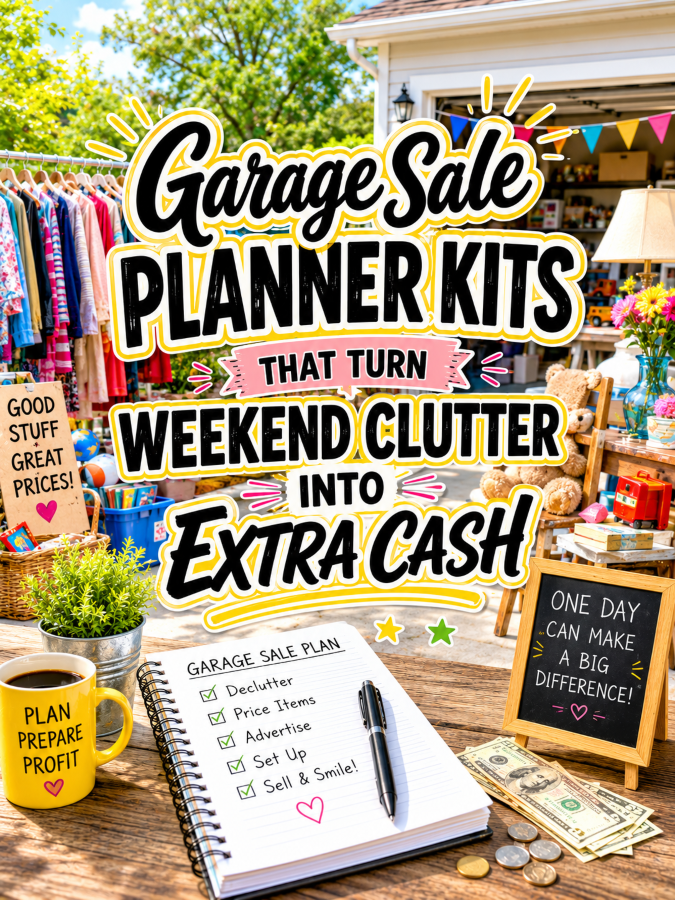
Garage Sale Planner Kits are downloadable printable systems that include planning checklists, pricing sheets, inventory logs, advertising planners, signage, shopping maps, cash trackers, volunteer schedules, and post-sale donation lists.
A starter planner can comfortably sell for around $7. Expand it into neighborhood sale bundles, moving planners, decluttering systems, and premium home organization collections, and you’ve built a natural product ladder reaching $27, $47, and even $77.
Families don’t need more clutter. They need a simple plan that helps them turn unused items into extra income. That someone creating that solution could absolutely be you!
Why This Niche Works
People are constantly decluttering, moving, downsizing, renovating, or making room for something new. Every one of those situations creates another opportunity for a garage sale.
Many families begin with good intentions but quickly become overwhelmed because nothing feels organized. That’s a bit like opening a bakery where every cupcake is delicious but nobody knows how much anything costs.
Once someone discovers a planner that makes garage sale preparation easier, they’ll often return for moving planners, home inventory binders, donation trackers, budget organizers, and countless related thingees.
Unlike decorating trends that change every season, clearing clutter and making extra money never go out of style.
Prior to pouncing upon this opportunity, you should first know all about the:
Tools You’ll Need
You don’t need a garage full of stuff to build this printable business. These dependable tools will help you create planners customers will actually use.
- Canva for designing attractive planner pages, signs, and checklists.
- Google Docs for organizing instructions, worksheets, and planning guides.
- AWeber for building your email list with organizing tips and printable updates.
- GetResponse for automated launches, newsletters, and seasonal promotions.
- Gumroad for selling downloadable planner kits.
- Teachable if you’d eventually like to teach decluttering or home organization.
- Amazon Garage Sale Planner Research for studying customer reviews and planner features.
Don’t spend weeks collecting shiny software thingees. Spend that time creating a planner that helps families enjoy a smoother, more profitable garage sale.
Next, move to:
Your 5-Step Action Plan
Follow these five steps unless you’d rather spend 22 hours searching for price stickers while someone accidentally sells the folding table everything was supposed to sit on.
Step 1. Research Successful Garage Sales
Spend about 91 minutes studying garage sale checklists, neighborhood sale events, decluttering blogs, moving guides, and customer reviews. Pay attention to the challenges people mention most often.
Create a master list containing 28 to 35 printable pages. Include pricing sheets, inventory trackers, advertising calendars, shopping checklists, setup guides, directional signs, cash logs, donation planners, and cleanup schedules.
Your research becomes an X-ray machine that uncovers planning problems many families don’t notice until sale day arrives.
Step 2. Design Your Core Planner Kit
Create a printable collection containing 36 to 48 pages that naturally guides families from their first decluttering session to packing away the final unsold box.
Include inventory sheets, pricing guides, shopping maps, event schedules, advertising checklists, volunteer assignments, cash tracking pages, and customer notes. Keep everything simple because simplicity is always a Good Thing.
Step 3. Build Specialty Editions
Create separate planner kits for neighborhood garage sales, moving sales, estate sales, community fundraisers, church sales, classroom fundraisers, and seasonal cleanouts.
Specific planners always feel more valuable than one giant planner trying to organize every possible event.
Your customers will appreciate having choices.
Step 4. Add High-Value Bonuses
This is where your planner begins standing out from the thundering herd.
Include printable price tags, promotional flyers, donation receipts, cleaning checklists, social media posting calendars, shopping maps, budgeting worksheets, and neighborhood participation trackers.
Those bonus thingees don’t require much additional work, yet they dramatically increase the value of your bundle.
People love thoughtful extras that save them time.
Step 5. Build Your Product Ladder
Launch your starter planner for $7. Expand into complete decluttering systems around $27, then introduce premium home organization libraries approaching $77.
Before long, your business won’t simply be selling planner pages. You’ll be helping families clear clutter, earn extra income, and enjoy much more organized weekends.
Once you’ve figured out all of the above, the next step is implementing:
3 Ways to Stand Out From The Thundering Herd!
Let’s be honest. Plenty of garage sale checklists already exist online. That’s about as surprising as finding old extension cords in someone’s garage.
The Good Thing is that most of those printables only cover the basics. Your planner can help families organize the entire event from the first box they open until the last donation is dropped off.
Way 1. Organize the Entire Selling Process
Don’t stop with pricing sheets and inventory lists.
Include room-by-room decluttering checklists, sorting guides, donation trackers, setup diagrams, advertising schedules, weather backup plans, customer negotiation tips, cash reconciliation pages, and post-sale cleanup lists. Those extra thingees transform your printable into a complete weekend planning system.
Way 2. Create Kits for Different Situations
Every garage sale starts for a different reason. Build separate planners for moving sales, neighborhood garage sales, estate sales, downsizing projects, spring cleaning weekends, fundraising events, and community sales.
When buyers immediately recognize their situation, your planner feels like it was created especially for them. That’s much more appealing than a one-size-fits-all checklist.
Way 3. Help Families Make More Money
People don’t organize garage sales simply to clear space. Most would also like to earn as much as they reasonably can.
Include pricing strategies, bundle offer ideas, customer flow layouts, promotional timelines, signage placement guides, and negotiation trackers. Those practical additions quietly increase the value of your planner while helping customers achieve better results.
Next, here’s the thing. You’re probably NOT the only person offering this service. So you now require:
3 Nifty Ways to Find Customers
You don’t need paid ads because people practically shine the Bat Signal every spring, every moving season, and every time they finally decide the garage needs to become a garage again.
Way 1. Decluttering Facebook Groups
Home organization communities are filled with people looking for practical ways to simplify their homes.
Share organizing tips, decluttering checklists, and preparation advice before mentioning your planner. Helpful guidance earns attention far faster than constant selling.
Way 2. Pinterest
Pinterest remains one of the best places for home organization ideas, printable planners, and decluttering inspiration.
Create attractive pins showing planner pages, garage sale signs, pricing worksheets, and organized setup examples. Beautiful visuals naturally encourage saves and clicks.
Way 3. Moving and Lifestyle Bloggers
Many bloggers regularly publish moving checklists, decluttering advice, and home organization content.
Partner through guest articles, printable recommendations, or affiliate relationships that introduce your planner to readers already preparing for major life changes.
Speaking of completed projects, now let’s move to:
3 Takeaways You Won’t Find Elsewhere!
These aren’t feel-good reminders. They’re practical ideas that quietly transform one printable into a dependable digital product business.
Takeaway 1. You’re Selling Simplicity
Families aren’t buying another planner because they enjoy filling in worksheets.
They’re buying calmer weekends, fewer forgotten tasks, and the confidence that their garage sale won’t feel like organized chaos. That’s the real product you’re selling.
Takeaway 2. Life Changes Create Repeat Buyers
People move, renovate, downsize, welcome new babies, help aging parents, and reorganize their homes throughout life.
Your planner remains useful because those milestones continue happening year after year.
Takeaway 3. One Planner Can Become a Complete Home Organization Library
Your Garage Sale Planner can naturally grow into moving planners, home inventory binders, donation trackers, household budget planners, cleaning schedules, storage organizers, and seasonal decluttering systems.
Those connected thingees work beautifully together and encourage customers to keep expanding their collection.
Now that you know the above, it’s time for:
3 Common Mistakes to Avoid
Many creators only include basic checklists.
That’s Not a Good Thing. Families also need pricing worksheets, advertising schedules, cash trackers, negotiation tips, signage, and donation planners to organize a successful sale.
Some sellers ignore seasonal opportunities.
Spring cleaning, summer neighborhood sales, moving season, and holiday decluttering all create fresh demand. Building seasonal versions is always a Good Thing.
Others create one planner and stop there.
The biggest opportunity comes from expanding into an entire collection of home organization resources that customers can use all year long.
What else should you know? How about:
Scaling Your Results
Expand beyond garage sales.
Create planners for moving, home maintenance, seasonal cleaning, household inventories, donation tracking, estate organization, storage systems, and family budgeting. One successful planner can inspire dozens of related products.
Create premium home management bundles.
Bundle decluttering checklists, moving planners, inventory trackers, cleaning schedules, budgeting worksheets, storage labels, and maintenance logs into complete household organization systems that busy families will happily purchase together.
Build an email list that homeowners genuinely enjoy.
Share organizing tips, seasonal decluttering challenges, printable updates, and household planning ideas throughout the year. A collection containing 33 home organization products could realistically generate an additional $506 to $1,452 each month through repeat buyers, memberships, bundle sales, and seasonal promotions. Trust me, you’ll thank me later.
Let’s now wrap up everything via the:
Your Next Steps
Start by listing 35 printable pages that would genuinely help someone organize a successful garage sale from beginning to end. Don’t try to squeeze every home organization idea into one giant planner because that’s usually a Not a Good Thing.
Design your first planner in Canva using clean layouts that guide users one step at a time. If someone can prepare an entire sale without feeling overwhelmed, you’ve created something truly valuable.
Then introduce your planner to five home organization communities, decluttering groups, neighborhood pages, or Pinterest boards. Remember, 5 good messages beats 50 generic ones every single time.
One thoughtfully designed Garage Sale Planner Kit can quietly become the beginning of an entire home organization printable business.
Next, let’s finish with:
Final Thoughts
The best garage sales aren’t measured only by how much money they make. They’re remembered because families clear space, simplify their homes, and realize they no longer need to store things they stopped using years ago.
Your Garage Sale Planner Kit helps make that transformation easier. It removes the guesswork, organizes every step, and gives families the confidence to turn clutter into cash without feeling overwhelmed. That’s exactly the kind of printable people recommend to friends long after the tables have been folded away.
Start with one planner that solves a genuine problem, keep listening to your customers, and continue building practical resources that make home organization simpler. You don’t need bazillions of printables to build a successful digital business. You simply need one thoughtful planner that helps families enjoy smoother, more profitable weekends.
That’s it. That’s your beginning!
If you were designing your very first Garage Sale Planner Kit today, what would you include first – pricing sheets, inventory trackers, advertising planners, setup layouts, or something completely unique?
Enjoy!