What Happened Last Night gained over 100,000 followers on Instagram without a single member functioning as the face of the brand. No personal branding. No lifestyle content. Five guys from Long Island, one video a week, and a refusal to post anything that isn’t worth the week it takes to make.
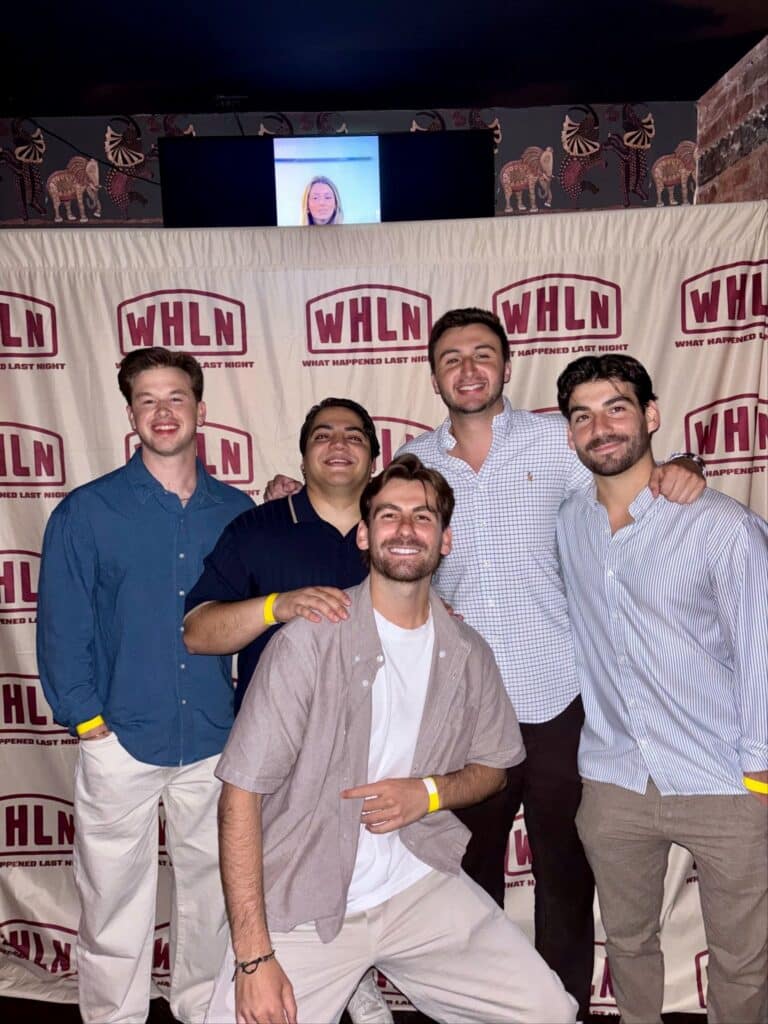
The five members behind that approach are longtime friends: Chris Madsen, who directs, shoots, and edits every video; his brother Anthony Madsen; and childhood companions Bryan Fox, Justin Manzi, and Luke Katovitz, who co-write and perform alongside each other. They grew up together in the same hometown.
“We want everything to feel like a movie, like a short movie at the end of the day,” Chris says.
That standard is not incidental to the collective’s growth. It is the explanation for it. Brand partnerships with companies, including Sweet Baby Ray’s and High Noon, have followed from a product that brands recognize as commercially produced. The audience built, the opportunities came, and the cadence stayed the same: one video per week, five people’s schedules permitting, or the video does not go up.
Building the Archive Before Anyone Was Watching
What Happened Last Night did not launch with a single video. It launched with 20 of them.
Six months before the account went live, Chris was already running writing sessions, building what he describes as a content Rolodex. He knew the production cadence, roughly a week from idea to finished edit, made real-time posting impossible. “I wanted to get ahead of that because I knew I didn’t want to slow it down when we first started posting,” he explains. That buffer allowed the collective to post daily for its entire first month, giving early viewers enough material to get lost in the page.
The strategy reflects Chris’s film production background more than any formula borrowed from the creator playbook. He studied film at Hofstra University and spent years shooting and editing commercial content through his production company before deciding he wanted to make something personal again. Anthony describes the turning point plainly: Chris “had a moment where he’s like, I want to start making stuff that I actually like making again.”
The first 20 videos were also a calibration exercise. “It was definitely a trial-and-error period trying to figure out what exactly works,” Anthony says.
By the end of that run, the formula had settled: relatable social situations given a specific twist, written to have a beginning, a middle, and a real ending. “Taking a relatable concept and putting our own unique twist on it and thinking out the story,” Anthony says. “How can we come up with a unique ending for a lot of our videos?”
The Real Cost of Posting Once a Week
Most creator advice points in one direction: post more. What Happened Last Night posts once a week. Anthony acknowledges the tension directly, calling it both the collective’s biggest structural challenge and the thing that makes the work memorable. “It’s a weakness and a strength,” he says.
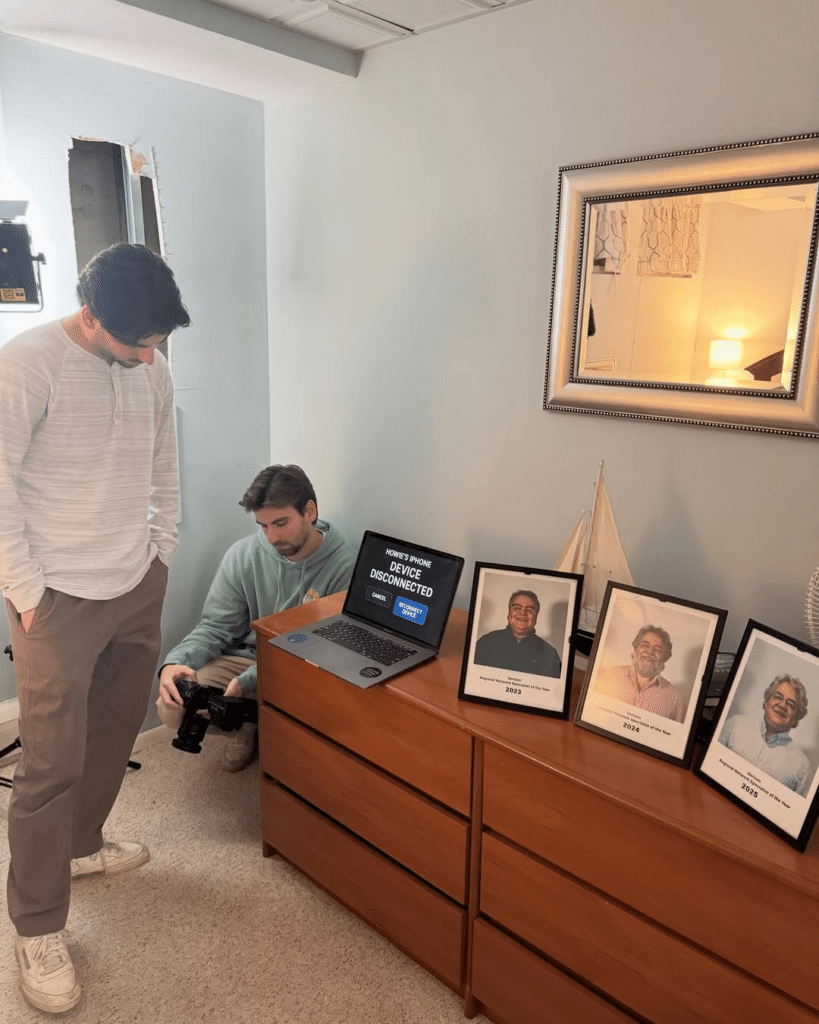
The single-video cadence is not a choice made out of convenience. It is the minimum viable production timeline for the kind of video the collective insists on making. Writing meetings happen on Sunday or Monday. Filming follows within a day or two. Chris then spends most of the rest of the week editing. The members say the schedule has created something they did not plan for: followers reaching out between posts to express excitement for the next release, treating the weekly drop less like a feed update and more like an event.
The slower cadence creates its own form of audience trust. Bryan observes that viewers now expect quality even from content that doesn’t hit broad themes. “Definitely, now that we’ve gotten to the point of our following getting bigger, we have a little more leeway,” he says. “People trust us to put out a good video every week, even if it might not be the most relatable thing.”
That expectation is built on constraint. Because there is only one video per week, every video matters. Ideas that can’t fit in a minute-thirty stay in the shared document, a running list that Justin says grew to nearly a thousand concepts before the account ever launched.
Five Voices, One Final Call
Running a comedy collective with five co-writers and no single designated talent creates an obvious question: who decides?
The answer is Chris, though he frames it carefully. “I have a final call, but oftentimes we’re usually on the same page about a lot of things, so it is pretty free flowing,” he says.
Ideas move through a group chat before reaching formal pitch meetings, where each member arrives with concepts ready. Some land quickly. Others stay on the back burner because they require a specific location or a larger cast than a given week allows.
That group dynamic also shapes how the collective handles underperforming content. Because everyone is in the weeds together on every video, a weak result belongs to no one person. “It’s not like we would ever blame one person for the video not doing well,” Bryan says. “We always think we put out content that we believe in.”
A missed week tends to motivate rather than deflate. The next filming session starts sooner.
What Brands Are Actually Buying
Brand partnerships entered the picture as the audience grew, and the first major one shaped everything that followed.
The Sweet Baby Ray’s campaign, which Chris describes as a “proof of concept,” demonstrated what What Happened Last Night could deliver: production value close to a commercial, analytics that held up, and creative integration that matched the collective’s voice. “Brands know that they’re going to get pretty close to commercial-level product in terms of what they’re going to get from us,” Chris says.
The management and deal-flow side runs through RunPoint LA. Internally, the collective’s criteria are narrow: does the brand align with what they would actually use, and can the concept be made entertaining enough to justify occupying one of the account’s weekly slots? Because a sponsored post competes with original content for the same real estate, the quality bar doesn’t lower when a brand is paying for it.
What all members say about working with brands comes down to process. “We appreciate when a brand gives us creative freedom,” Bryan says. “We know what works with our audience.” Justin narrows it further: “Trust time and freedom. If they could trust us to put out quality content, give us the time to make it quality, and the freedom to go off on our own.”
What a Group Offers That One Person Cannot
The long-form potential of What Happened Last Night is already visible to its audience. Comments on the collective’s videos regularly call for a television deal, a movie, or a Netflix series. Chris is unbothered.
“I think people in our audience are looking for that type of stuff,” he says. Plans for longer YouTube content are already in development, driven partly by a backlog of ideas that have never fit the minute-thirty format.
For Chris, the case for the collective model is not primarily about production capacity. It is about the diversity of connections a group of characters creates. A solo creator, however talented, offers one point of entry. What Happened Last Night offers five.
“There’s more diversity,” Chris says. “People can connect with all the different characters and people within the group on different levels.”
That equation makes the collective harder to build and, for the same reason, harder to replicate. The five men in it have known each other long enough that the chemistry is not constructed for the camera. It shows up in the writing. It shows up in the editing. And apparently, it shows up in the comments.
Subscribe to Our Newsletter
Check Out Our Podcast