
The process behind Y-12’s demolition of a building use to enrich uranium
Erik Olds describes the work behind Y-12’s largest demolition project and the first time crews there have torn down a building used to enrich uranium.
- A top Department of Energy official visited Oak Ridge to discuss the city’s role in the nation’s energy and technology future.
- The Trump administration aims to expand nuclear energy capacity and use it to power military and AI initiatives.
- The Office of Environmental Management may be renamed the Office of Nuclear Restoration and Revitalization to reflect an evolving mission.
- Cleaned-up land in Oak Ridge is being repurposed for private industry and to support AI projects like the Genesis AI mission.
Oak Ridge’s energy enterprises have the Trump administration’s attention.
Tim Walsh, assistant secretary for the Office of Environmental Management at the U.S. Department of Energy, is one of several energy department leaders to visit Oak Ridge for a look at what’s new in a city home to the nation’s largest multi-program science and technology lab, a nuclear weapons facility and a private nuclear industry that’s invested billions in nuclear projects in recent years.
Walsh is leading an office that’s been remediating toxic and radioactive sites in Oak Ridge and around the U.S. for decades. He also is planning to reorganize and rename the office he runs, shifting from Environmental Management to the Office of Nuclear Restoration and Revitalization.
His April visit comes as President Donald Trump aims to reduce regulations on new nuclear facilities, quadruple nuclear capacity by 2050 and use reactors to power the military and AI. The Oak Ridge National Lab also has been tapped to advance Trump’s Genesis AI mission.
Knox News sat down with Walsh to ask him about the reason for his visit, as well as his vision for the future of energy in Oak Ridge.
This Q&A has been lightly edited for length and clarity.
Q&A with Trump energy official Tim Walsh in Oak Ridge
Knox News: Why was it important to visit this area, and what were your goals for this trip?
Tim Walsh: This is one of our most important sites for many reasons because it really captures everything that the Department of Energy is all about, dating all the way back to 1942 in the Manhattan Project. The center of nuclear innovation truly did happen right here and continues to today.
And again, (environmental management) is integral to the Office of Science mission by clearing out older facilities, allowing newer facilities to be built toward the K-25 site. To see that land now is enabling the nuclear renaissance − the nuclear renaissance is really important because we need firm, reliable and secure power to enable American prosperity.
Knox News: What’s next for Environmental Management?
Walsh: I see (environmental management’s) next big mission as actually helping revitalize these sites for two main purposes. One is the nuclear renaissance − to enable more power generation to fuel America’s prosperity. And I see (the) second as part of our initiative for AI dominance. It takes a lot of electrons, and it’s truly a race we’re in right now against our adversaries because if we don’t do it, they will, and they’ll outcompete us.
I think under President Trump’s leadership, we’re going to continue to lead the globe in scientific discovery that’s enabled by AI and the future of quantum computing, which happens right here in Oak Ridge. All of that requires power, and that power is going to happen through the nuclear renaissance.
Knox News: Can you tell me about the connection between Environmental Management’s work and the energy department’s work and the AI boom?
Walsh: We have the legacy sites − former gaseous diffusion sites that happened in Portsmouth, Paducah and right here in Oak Ridge − that became functionally obsolete because they used a lot of power and took a lot of infrastructure. But the land is a great national asset, and allowing private industry to come in now and build with private capital on these former brownfield sites is a great reuse for America. It’s really a win-win because it allows us to do a couple of things.
One is accelerate the cleanup mission and then repurpose that. Then, also start transferring some of the operating costs that we’ve been burdened with to a private industry so they can use the land, help reduce our operating costs of these facilities and use it for the next generation of scientific discovery.
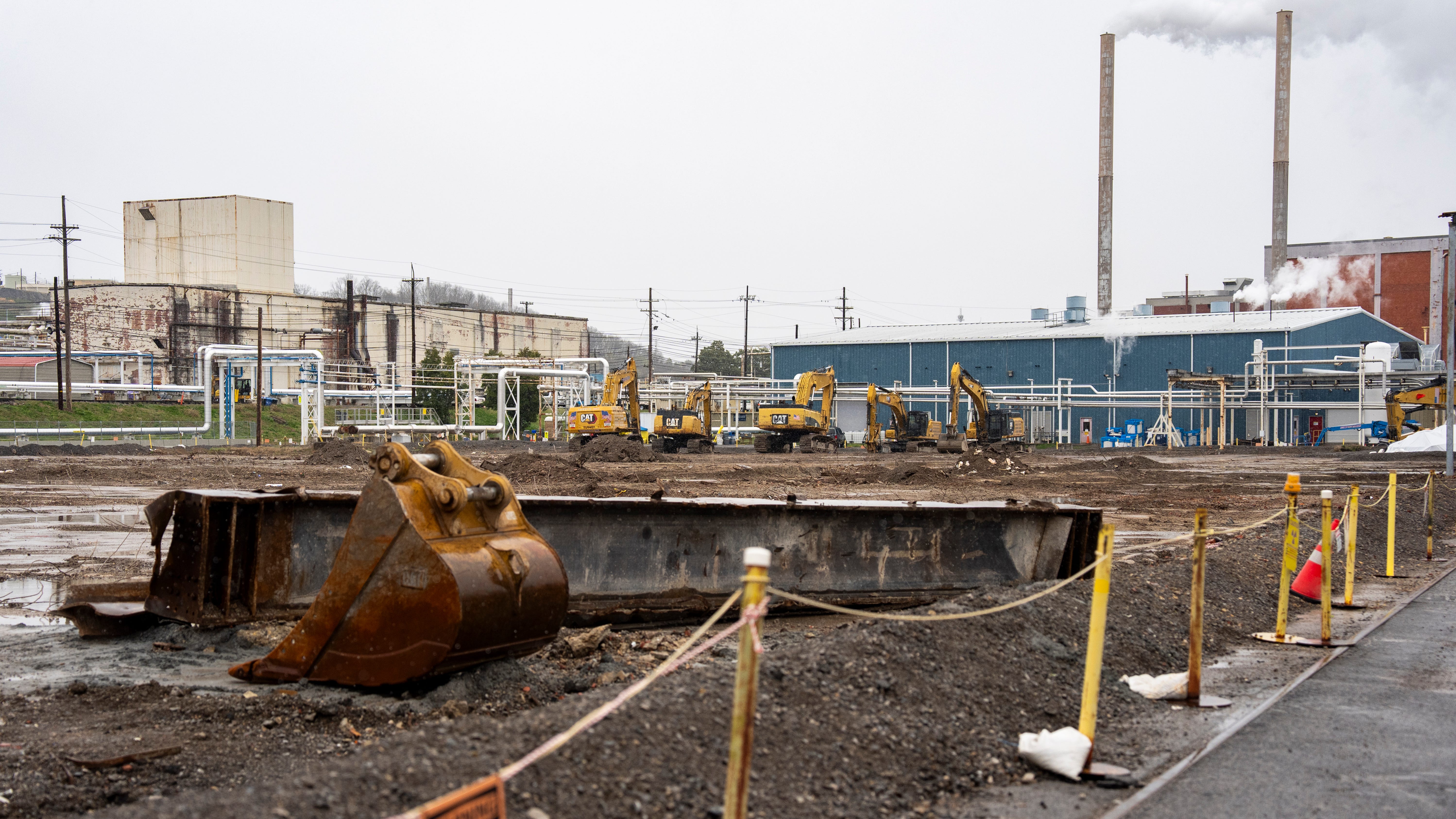
Knox News: Oak Ridge marked the end of a major demolition project a few weeks ago. How will that land be used?
Walsh: This is an all-of-government initiative to collaborate on advancing AI infrastructure to support not only the Department of Energy’s goals for fusion and advanced scientific discovery and NASA missions, but I think it can also be used for other important missions for Department of War and other agencies within the government.
Knox News: Would that include Genesis AI?
Walsh: Yeah, it definitely is going to be supporting Genesis.
Knox News: Can you talk about why you want to rename Environmental Management?
Walsh: I’ve been on board for about six months now. A couple of things have become apparent to me. One is the mission is evolving as we are cleaning up our sites, enabling the nuclear renaissance to happen. We’re taking on a new role of (environmental management), which is an enduring role.
But also enabling the nuclear renaissance and part of the nuclear renaissance is the nuclear fuel cycle. So, being able to reprocess nuclear fuel into new medical isotopes. That happens right here in Oak Ridge with the U-233 (uranium) that IsoTek is reprocessing into cancer-treating isotopes. It’s really a process of cleaning up to cures and cleaning up to nuclear energy.
It’s not just we clean the site up and leave the site. But we clean the site up and allow new future missions to continue to happen, as Y-12 continues to do their mission to support the national defense. And the Office of Science will be here long-term. Across the complex, we needed to bring a new sense of urgency and a new sense of purpose to embrace what I’m calling a Vision 2040, which is really accelerating our cleanup, be better stewards of taxpayer dollars. I think along with that vision, will come a reorganization.
It doesn’t mean we’re getting rid of people but putting the resources where we really need them. And then a new name to really capture that new mission, which is Nuclear Restoration and Revitalization.
Knox News: What does that reorganization look like in Oak Ridge?
Walsh: I don’t think much will change in Oak Ridge. Erik Olds is our site manager here, and Erik is awesome and able to take the lessons learned from K-25 demolition and spread it north to Paducah and Portsmouth. Now, Erik is overseeing three sites, including Lexington, which is a field office for us.
Being able to take those lessons learned and really spread it across the complex − so more regional focus. And I think that’s what you’re actually hitting on: Take that expertise, and let’s focus it regionally and put the resources in the field.
Mariah Franklin reports on technology and energy for Knox News. Email: mariah.franklin@knoxnews.com. Signal: mariahfranklin.01
Support strong local journalism by subscribing to subscribe.knoxnews.com