Introduction
Earth Day shows up every April like clockwork, bringing with it a wave of teachers planning lessons, families searching for meaningful activities, and eco‑minded shoppers looking for tools that make sustainable living feel simple instead of overwhelming. That predictable curiosity is exactly what makes it such a sweet spot for printable creators. You are not convincing anyone to care – the interest already exists. Your job is simply to offer something helpful, beautiful, and easy to use.
When you create a well-designed Earth Day printable bundle, you are stepping into a seasonal marketplace where practicality meets purpose. And when people feel good about what they buy, conversion happens almost effortlessly.
Tools
- Canva
Create polished, cohesive designs quickly with templates that keep your pages consistent and printable-friendly. - Etsy
A search-based platform where buyers actively look for classroom activities, trackers, and seasonal downloads. - Pinterest
Acts like a long-term traffic engine; seasonal pins can generate views long after posting. - Google Docs or PDF Editor
Helpful for creating editable versions buyers can customize. - Botanical Planner Inspiration
Seeing real-world layouts sparks ideas for structure and usability.
Step-by-Step Action Plan
Step 1: Choose a Clear Printable Concept
Create an Earth Day “Eco Challenge Kit” with daily sustainability tasks, recycling trackers, and reflection pages. Simple structure wins over complicated creativity.
Step 2: Decide Who You Are Designing For
Pick one audience: classrooms, families with children, or eco-conscious planners. Narrow focus makes your product feel tailored rather than generic.
Step 3: Build a Bundle
Include challenge calendars, habit trackers, certificates, and educational worksheets. Bundles justify higher pricing and increase perceived value instantly.
Step 4: Design With Purposeful Simplicity
Use earthy colors, minimal graphics, and clear spacing. Printables should feel calming and practical, not visually overwhelming.
Step 5: Test Print Everything
Print and fill out the pages yourself. This step catches spacing issues and ensures the user experience feels natural.
Step 6: Create Realistic Mockups
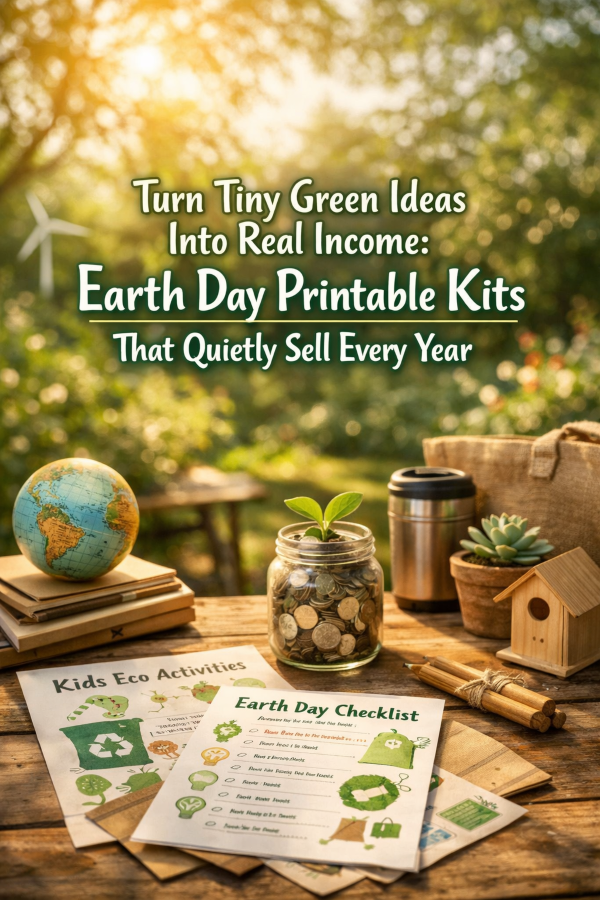
Show the printable on a desk with plants or stationery. Lifestyle imagery helps buyers imagine using the product.
Step 7: Write Keyword-Friendly Listings
Use phrases like “Earth Day activity pack,” “eco challenge printable,” or “sustainability tracker bundle.” Clarity brings traffic.
Step 8: Launch Early and Observe
Upload ahead of the holiday so planners discover your product during preparation season.
Customer Acquisition Ideas
Educational Pinterest Content
Create pins that teach eco tips while showcasing your printable subtly. Helpful content attracts warmer audiences.
Short Demonstration Videos
Film quick clips showing someone completing a daily eco challenge. Visual proof makes the value obvious in seconds.
Free Mini Printable
Offer one free worksheet to build an email list for future launches and repeat sales.
Teacher Community Engagement
Share ideas and lesson suggestions in educator spaces. Focus on usefulness rather than promotion.
Creative Monetization Tips
30-Day Sustainability Challenge Packs
Create structured challenges that help users build eco habits gradually, making your printable feel like a guided experience.
Kids Nature Observation Journals
Parents and teachers love structured pages that turn outdoor exploration into learning moments.
Editable Certificates and Awards
Recognition printables for eco achievements add personalization and encourage bundle upgrades.
Year-Round Eco Planner Add-ons
Expand your Earth Day product into evergreen planner inserts so income continues beyond the seasonal spike.
Resources
- Earth Day Official Website
- Canva Template Library
- Earth Day Activity Inspiration
- Earth Day Printable Marketplace Search
- International Observance Calendar
Motivational Close
Seasonal printables are like planting seeds – small actions that compound over time. You create once, refine gently, and watch each year bring new buyers who are already searching for exactly what you made. Start with one thoughtful idea, keep it simple, and let consistency turn creativity into dependable income.