
Ford deleted all of its social content across some of its accounts yesterday, and many were wondering what that meant. The answer is a little boring on the surface. It’s Ford’s first new global ad campaign in more than a decade, replacing the anonymous and meaningless “Go Further” with a tagline that, at the very least, has the name of the company inside of it.
But what’s interesting about the “Ready, Set, Ford” global campaign to me isn’t the aesthetic. I’m fascinated by the strategy behind it, which seems to be rooted in fear and uncertainty. Specifically, it’s at least partially inspired by the uncertainty around artificial intelligence.


This is important! Volkswagen is spending a billion dollars, for instance, in hopes of saving months of development time for new vehicles. If it’s successful, that could save the company many billions. For Software-Defined Vehicles (SDVs), the prospect of AI could make your car more like “connected devices” than static machines.
According to the new-old-new CEO of Volvo, all of this is not just important, it’s existential. I’d say everything feels existential now. It sucks! I’m going to do The Morning Dump in reverse this morning, with the lead story at the bottom.
Ready, Seat, TMD!
‘AI Is Our Key To Greater Speed, Quality, And Competitiveness’ Says VW Group Board Member
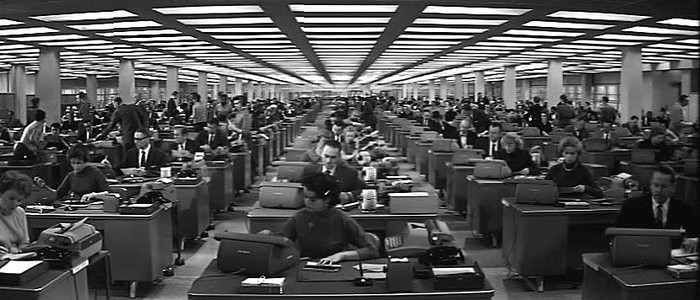
One of my favorite films is the Billy Wilder-directed dark comedy The Apartment from 1960. It’s also probably one of the most overlooked films of the 21st century, lacking the awareness of Wilder’s other projects like Sunset Boulevard or Some Like It Hot.
Go watch it tonight.
I mention The Apartment because there’s a scene early on in the film that I think about all the time. It shows Jack Lemmon as an insurance clerk for the fictional Consolidated Life Insurance Company of New York. What strikes me here is that none of the people on this massive office floor (pictured above) represent a job that exists anymore. Take this huge scene of people, and leave two, and that’s what the present is.
Most of these jobs were replaced by computers, and not even particularly smart ones. Microsoft Office knocked out at least 75% of them, and most of that was probably Excel. That’s to say nothing of the people in the mailroom killed by Outlook.
This made Microsoft an extremely valuable company until Google made all of that stuff essentially free. This is the price of progress, and in economic terms, these represent huge gains in productivity. Filling in a bunch of spreadsheets by hand and typing them up is inefficient and not a particularly rewarding job.
Volkswagen started its slow march towards engineering prowess and capability around the same time that The Apartment was in theaters, but it was an approach built on hiring a ton of engineers. It wasn’t fast, and it was labor-intensive. As a company, VW is on its back foot. It needs to do something to catch up.
The plan, according to Volkswagen, is to leverage AI to make developing cars faster:
“With artificial intelligence, we are igniting the next stage on our path to becoming the global automotive tech driver”, says Hauke Stars, Member of the Board of Management for IT at the Volkswagen Group. “AI is our key to greater speed, quality, and competitiveness – across the entire value chain, from vehicle development to production. Our ambition is to accelerate our development of attractive, innovative vehicles and bring them to our customers faster than ever before. To achieve this, we deploy AI with purpose: scalable, responsible, and with clear industrial benefits. Our ambition: No process without AI.”
The company claims that it’s using 1,200 AI applications already, and that the more than $1 billion it’s spending now will save it about $4-5 billion by 2035. In particular, the company thinks it’ll speed up the process of designing and building cars:
In vehicle development, for example, the Volkswagen Group is building an AI-powered engineering environment together with its partner Dassault Systèmes – for all Group brands and across all regions. It is designed to support engineers through virtual testing and component simulations, significantly accelerating development processes. Alongside other initiatives, this collaboration aims to helping to shorten the product development cycle for Group brands to 36 months – or less – making it at least 25 percent (around 12 months) faster compared to today.
AI integration is also advancing in production: Leveraging the Volkswagen Group’s proprietary Digital Production Platform (DPP) – a “factory cloud” now connecting more than 40 sites – Volkswagen is continuously introducing new AI applications into its manufacturing processes. These help optimize the interaction of complex processes in vehicle assembly, contribute to more efficient use of energy and materials, reduce costs, and lower CO₂ emissions.
I have to be that guy and point out that Volkswagen tried to do this with software, creating a company initially called Car.Software, which became Cariad, which became such a failure that Volkswagen had to promise Rivian about $5 billion to help solve the problem it created for itself.
There’s the money you save by making the building of cars faster, but AI also has a role to play in the cars once built, at least according to the people who are supposed to know better.
Do People Think Of Cars As ‘Static Machines’?
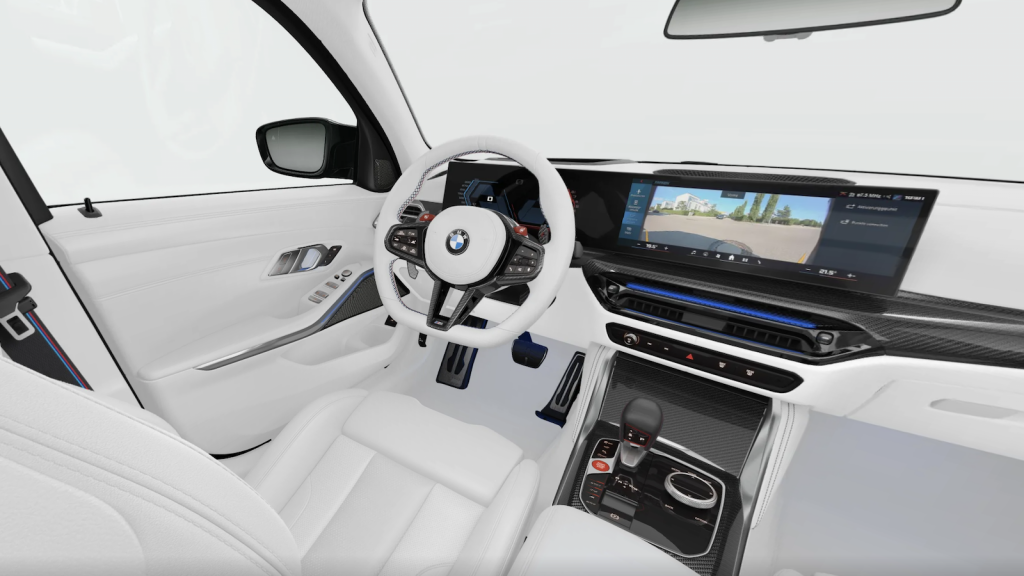
There’s an S&P Global Mobility report out about the future of SDVs, and a lot of that has to do with developing a common software platform (as Rivian and Tesla have done) in order to run a vehicle, as opposed to trying to cobble together a bunch of systems from various suppliers.
AI, according to this report, has a role to play on the consumer level and not just the production level:
Christoph Grote explained how BMW is embedding intelligent lighting systems that respond to conditions in real time and digital key technology that lets drivers use smartphones instead of traditional fobs. These features show how AI makes vehicles more context-aware, enhancing both safety and personalization.
Furthermore, AI can analyze vast amounts of data from vehicle sensors to improve predictive maintenance, ensuring that vehicles are serviced before issues arise.
By weaving AI into SDV architecture, vehicles can stay updated and responsive for years after purchase, helping them feel less like static machines and more like connected devices that learn and adapt to the owner.
That static machine line is interesting. Obviously, cars move, and are not static in that sense. But they have historically been stuck in place technologically. Your car stops becoming more advanced the day it rolls out of the factory. With OTA updates and a more SDV approach, that may not be as true anymore.
Volvo CEO: ‘Some Companies Will Adapt To New Circumstances And Survive. Others Will Not’

I don’t know if I’ll be entirely retired when I’m 74, but I plan to at least be semi-retired. That’s not the case for Hakan Samuelsson. He’d left Volvo as CEO of the company, but an uncertain future brought Samuellson back to the company he used to run.
He did a long interview with Bloomberg and he touches on the moment we are in:
Q: How do you see the car industry evolving from here?
A: The industry will be electric — there’s no turning back. It may take a bit longer in some regions, but the direction is clear. In (about) 10 years, cars will all be electric and they will be lower cost.There will be new dominant players, exactly as Ford, GM, Toyota and Volkswagen were in the old world. In the new world, there will be two or three very strong Chinese brands. That makes the room for the old ones tougher. So this will trigger a (wave of) restructuring. Some companies will adapt to new circumstances and survive. Others will not.
I think that is largely true. Who will the old, tougher brands be? Ford is making a play for the future.
‘Ready Set Ford’ Has Roots In Everyone’s Insecurity
Everything is changing. I can feel it. I know it. To some degree, I want the change to come.
As a website, The Autopian is disadvantaged in the short term by its membership model. There are competitors who are able to fill their pages with AI slop or, somehow worse, human-written articles that are designed to appeal to specific Google products. While we don’t ignore the traffic that can be gained from various platforms, we aren’t going to do it at the cost of posting articles from paid consulting firms that make the site worse.
The uncertainty of when and how and how much weighs on me, as it should given that that’s my job.
Ford killed all of its social media content yesterday, and people noticed. What was happening? Was there new product coming?
Nope. The company is still there. There’s no immediate new product. There’s just a new global branding strategy that replaces “Go Further.”
I think this is an improvement and, also, I don’t think I’m going to think about a catchphrase all that much. There is an explanation of it from Ford’s marketing chief Lisa Materazzo in The Detroit News that I am thinking about:
“Ford is a very optimistic and resilient brand, and that’s reflected in this idea of Ready Set Ford,” she said during a briefing. “We really tapped into some universal global trends that we were seeing. And one of those trends that is probably 24 months or more in the making has been this idea that consumers can really feel overwhelmed. The term that kept popping up is called polycrisis. … People are a bit overwhelmed, probably starting right around the time of COVID: So, health concerns, financial concerns, technology concerns — AI, what does AI mean for me?
“There are so many things that people feel angst about,” she continued. “However, the really interesting insight in all of that is people are actually very optimistic and very resilient when you give them the tools and the capability to feel empowered. And that was one of our big insights, because we think that we do that better than anybody else through our products, services and experiences.”
What the uncertainty around AI means for me is that I still want a Maverick Hybrid.
What I’m ing To While Writing TMD
As noted by Styx in their song “Mr. Roboto,” we all need control. I want control.
The Big Question
How do you feel about AI?
Top photo: Honda